AIRsteril vs Viruses
What the evidence shows about AIRsteril and airborne contamination
Customers increasingly ask whether air treatment systems are effective against viruses such as Ebola, Nipah, or emerging respiratory threats. The answer depends on understanding how viruses behave and what the laboratory evidence demonstrates.
The Virus Classification Question
Not all viruses are equally difficult to inactivate. The key distinction is structural: some viruses have a lipid envelope surrounding their genetic material, while others have a hard protein shell.This matters because enveloped viruses are generally more susceptible to inactivation by germicidal UV, a mechanism with over a century of independent scientific evidence behind it. Non-enveloped viruses (like norovirus and rotavirus) are more resistant.
Where Current Viruses of Concern Fall
EbolaEnveloped virus (filovirus)
Enveloped virus; generally susceptible to UV-C inactivation based on established disinfection science
Nipah
Enveloped virus (paramyxovirus)
Enveloped virus; generally susceptible to UV-C inactivation based on established disinfection science
Hantavirus (Andes)
Enveloped virus (bunyavirus)
Enveloped virus; generally susceptible to UV-C inactivation based on established disinfection science
SARS-CoV-2
Enveloped virus (coronavirus)
Enveloped virus; generally susceptible to UV-C inactivation based on established disinfection science
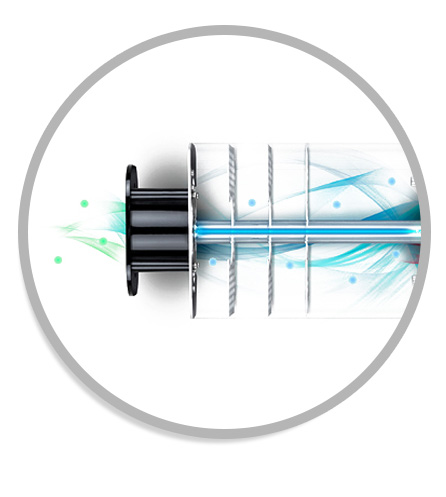
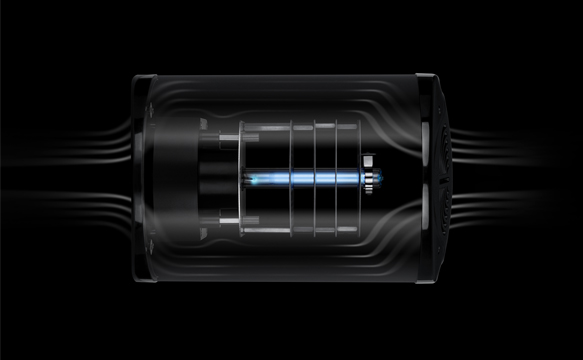
Bottom line: Ebola, Nipah, Hantavirus, and coronavirus are all enveloped viruses. Based on established disinfection science, they fall into the category of airborne microorganisms expected to respond well to germicidal UV exposure. AIRsteril employs germicidal UV as its primary disinfection mechanism alongside other processes, and the independent AIRsteril test results reflect the combined effect of the full system in operation.
What Laboratory Testing Shows
HygCen Laboratory, Germany (2020)99.99%
reduction in airborne viral contamination within 10 minutes, tested across a large 75m³ chamber rather than within the unit alone. The test used the non-enveloped surrogate Phi-X174, which is harder to inactivate than enveloped viruses. The expert opinion stated that comparable efficacy can be assumed for enveloped viruses, including coronaviruses.
Working Airport Washroom (ALS Global)
77%+
reduction in airborne microorganisms measured in a live, operational airport washroom. A real-world environment, not a sealed chamber.
Ambulances in Active Service (ALS Global / NHS)
81%
reduction in airborne contamination measured in ambulances in active service with NHS South Central Ambulance Service.
Why this matters: The headline 99.99% figure reflects AIRsteril whole-environment testing across a large room, not reduction measured inside the unit. The airport and ambulance results show measurable reductions also occur in live, working environments. And because the laboratory surrogate used in AIRsteril testing is harder to inactivate than enveloped viruses such as Ebola, Nipah or coronavirus, the evidence supports effectiveness against these airborne microorganisms.
The Aerosol Problem AIRsteril Addresses
Enveloped viruses travel in respiratory aerosols and can accumulate in enclosed spaces, particularly bathrooms and poorly ventilated areas. Peer-reviewed measurement found that after around 100 toilet flushes over 3 hours, ambient aerosol levels in a public restroom rose by 209% for particles in the 0.5 to 1 micrometre range, while levels outside the room were unchanged (Schreck et al., Physics of Fluids, 2021).Standard cleaning doesn't address this. Continuous air disinfection does. By reducing airborne microbial loads between cleaning cycles, AIRsteril addresses an airborne hygiene pathway that surface cleaning alone does not.
What AIRsteril Cannot Do
Important Boundaries• Close contact: If two people are in direct contact or in close proximity, a single unit won't prevent direct exposure to respiratory droplets. Isolation and distance remain primary controls.
• Not a replacement for cleaning: Surfaces still need regular disinfection. AIRsteril complements cleaning; it doesn't replace it.
• Not a standalone outbreak measure: Outbreaks require multiple layers working together: vaccination, testing, isolation, hand hygiene, ventilation, surface cleaning and air treatment.
• Requires adequate ventilation: AIRsteril works best in spaces with proper air handling. Severe underventilation limits effectiveness.
The Bottom Line
Ebola, Nipah, Hantavirus, and coronavirus are enveloped viruses, structurally more susceptible to germicidal UV inactivation based on established disinfection science. Independent AIRsteril testing using harder-to-inactivate surrogates supports effectiveness against these airborne microorganisms. Real-world data from healthcare and office settings shows measurable reduction in airborne contamination.But this is one layer of comprehensive hygiene strategy. Good hygiene requires cleaning, hand washing, respiratory etiquette, isolation of sick individuals, and adequate ventilation, all working together with continuous air disinfection.
AIRsteril reduces ambient airborne contamination. That matters. It doesn't replace the basics.
Evidence sources: HygCen GmbH Laboratory Test Report SN 30794 (November 2020), ALS Global airport washroom and ambulance testing (NHS South Central Ambulance Service), disinfection difficulty hierarchy from established microbiology literature, and Schreck et al., "Aerosol generation in public restrooms," Physics of Fluids 33, 033320 (2021).