Commercial odour control: causes, challenges and solutions
Odour problems in commercial environments are often treated as a cleaning issue. In reality, they are usually caused by what is happening in the air.
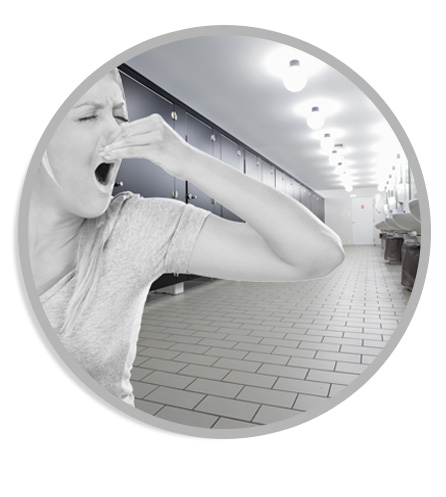
From washrooms and bin stores to food waste areas and high-traffic public spaces, persistent odours are typically the result of airborne microorganisms and odour-causing compounds that build up between cleaning cycles.
Persistent odours can lead to complaints, reputational damage and increased operational pressure. Taking a structured approach to odour control helps organisations maintain standards, improve user experience and reduce ongoing issues.
What causes odours in commercial environments
Most unpleasant smells originate from the breakdown of organic material.
This includes:
• food waste
• human waste
• moisture and residues
• general organic contamination
As bacteria break down this material, they release volatile organic compounds, ammonia and sulphur compounds into the air. These gases are what we recognise as unpleasant odours.
In enclosed or busy environments, these airborne compounds can build up quickly and spread throughout the space.
Why cleaning and ventilation are not enough
Cleaning is essential for hygiene, but it only addresses contamination at the point it is applied.
Between cleaning cycles, airborne microorganisms and odour-causing compounds continue to circulate and accumulate.
Ventilation systems help remove stale air, but they do not eliminate the source of odours. In many cases, ventilation simply redistributes contaminated air within a building or exhausts it to other areas.
This is why odours often return quickly, even in environments that are cleaned regularly.
The role of airborne contamination
Odours are not just surface-based problems. They are primarily airborne.
Each time a space is used, microorganisms and particles are released into the air. In washrooms, for example, flushing can disperse airborne contaminants. In waste areas, decomposition continuously releases odour-causing compounds.
These airborne contaminants can move throughout a space and settle over time, contributing to ongoing hygiene challenges and persistent smells.
High-risk environments for odour build-up
Certain areas are more prone to odour problems due to usage, moisture and organic material.
Washrooms
High usage, moisture and organic residues create ideal conditions for odour development.
Learn more about why washroom odours become worse in warm weather.
Bin stores and waste rooms
Enclosed spaces containing organic waste can quickly develop strong odours, particularly in warmer conditions.
Learn more about why commercial bin stores become a major odour problem in summer.
Food waste storage areas
Food waste decomposes rapidly, releasing odour-causing gases and airborne contamination.
Learn more about the growing odour problem in food waste stores.
Waste transfer and processing sites
Large volumes of waste increase the scale of airborne odour challenges and make control more complex.
Learn more about waste sites and transfer stations, the hidden airborne problem.
High-traffic environments
Busy public areas experience continuous introduction of airborne contaminants, contributing to odour build-up between cleaning cycles.
Learn more about managing odours in high-traffic environments.
Approaches to odour control
There are several methods used to manage odours in commercial environments.
Ventilation
Moves air but does not remove odour sources.
Fragrance and masking systems
Temporarily cover smells but do not address the underlying cause.
Chemical treatments and fogging
Can be effective in specific situations but are typically limited to unoccupied periods.
Continuous air treatment
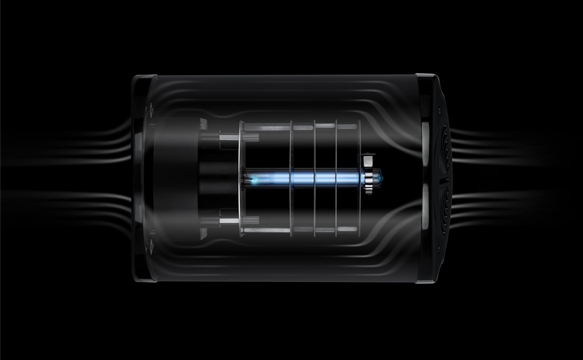
Treats the air itself, reducing airborne microorganisms and odour-causing compounds throughout the day.
Learn more about how different air purification technologies compare.
A more effective approach to odour management
Effective odour control requires addressing the problem at its source.
By focusing on the air rather than only surfaces, organisations can reduce odour build-up, improve environmental conditions and maintain a more consistent standard of hygiene throughout the day.
Continuous air treatment technologies support this approach by helping maintain cleaner air between cleaning cycles and reducing the conditions that lead to persistent odours.
Summary
Odour problems in commercial environments are rarely caused by a single issue. They are the result of ongoing airborne contamination that builds up over time.
Cleaning, ventilation and periodic treatments all play a role, but they are often not enough on their own.
Understanding the role of airborne contamination allows organisations to move from reactive odour control to a more consistent, proactive approach.