AIRsteril & Viruses: FAQ
Direct answers to common questions about how the technology works against viruses, and what it does and does not do.
Customers increasingly ask whether air treatment technology works against specific viruses. This FAQ addresses the most common questions, covering what AIRsteril does, what it doesn't, and the evidence behind it.
General Questions
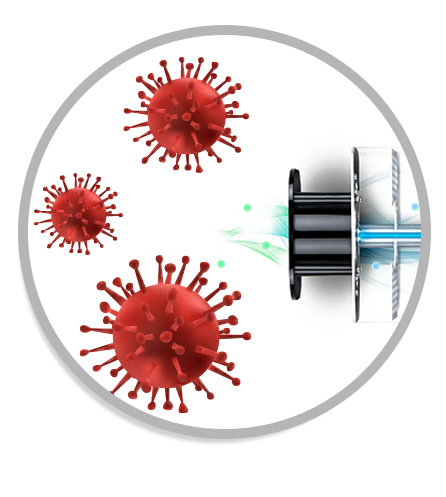
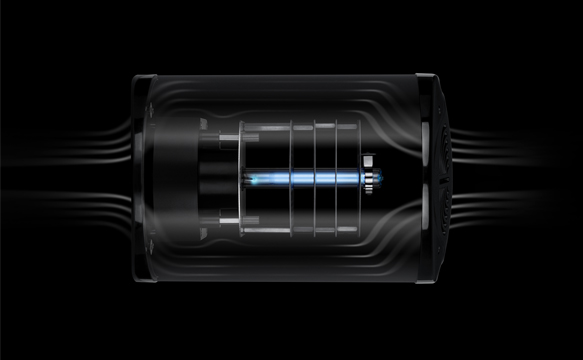
How does AIRsteril work against viruses?AIRsteril uses germicidal ultraviolet radiation at 254 nanometres as its primary disinfection mechanism. Germicidal UV at this wavelength destroys airborne microorganisms by damaging their genetic material (DNA or RNA), preventing reproduction and effectively inactivating them. This is a physical process with over a century of independent scientific validation, widely used in water treatment, healthcare and laboratory settings.
AIRsteril combines this established germicidal UV mechanism with other processes to achieve overall air quality improvement. The independent AIRsteril test results reflect the full system in operation across a treated space.
Does AIRsteril prevent all viral transmission?
No. AIRsteril addresses airborne contamination, meaning viruses suspended in the air. It does not prevent direct contact transmission (touching contaminated surfaces then touching your face) or close-contact transmission (when two people are in direct proximity).
What this means in practice: If you sit opposite someone actively coughing and they are within 1 to 2 metres, close-contact droplet exposure is possible regardless of air treatment. If you shake someone's hand and then touch your face without washing, contact transmission can occur. AIRsteril continuously reduces the background level of airborne contamination in the environment; it does not create a protective bubble around individual people.
For this reason, it works alongside, not instead of, hand hygiene, isolation precautions, and absent-when-sick policies.
What's the evidence that it actually works?
Laboratory evidence:
99.99% reduction in airborne viral contamination within 10 minutes, tested across a large 75 cubic metre environment rather than within the unit alone (HygCen GmbH, Germany, 2020). The surrogate used is harder to inactivate than respiratory viruses, so effectiveness against common respiratory viruses is likely at least comparable.
Real-world evidence:
77%+ reduction in airborne microorganisms in a working airport washroom, and 81% in ambulances in active service (ALS Global / NHS South Central Ambulance Service).
Separately, an NHS facility documented measurable reductions in respiratory illness absences after installing AIRsteril units, with an estimated saving of £213,704 in sickness coverage over the monitoring period. This was based on reported sickness absence rather than air testing.
Which viruses does it work against?
Germicidal UV has demonstrated efficacy against a wide range of viruses and is particularly effective against enveloped viruses, the group that includes influenza, measles, coronavirus (including SARS-CoV-2), Ebola, Nipah, and Hantavirus.
Non-enveloped viruses (like norovirus and rotavirus) are harder to inactivate, but germicidal UV still works against them; it just takes slightly longer or requires higher doses.
The viruses that cause most respiratory illness and most concern in healthcare and workplace settings are enveloped viruses. These are the ones AIRsteril addresses most effectively.
Specific Virus Questions
SARS-CoV-2 (Coronavirus)
Does AIRsteril technology work against COVID-19?With AIRsteril in operation, airborne SARS-CoV-2 present in the environment is continuously reduced. Independent AIRsteril testing using a comparable viral surrogate shows greater than 99.99% reduction within 10 minutes across a large room. SARS-CoV-2 is an enveloped virus, the type that established disinfection science identifies as more susceptible to germicidal UV inactivation.
What this means: in an occupied facility with continuous air treatment, AIRsteril helps maintain measurably lower levels of airborne viral contamination in the environment.
What it does not do: it does not prevent transmission if you are sitting opposite someone coughing directly at you, and it does not remove the need for vaccination, testing, or isolation when infected. Is this useful now that most people have immunity?
Yes, but for different reasons. As population immunity increases, severe illness decreases, but transmission continues. For healthcare facilities, workplaces with vulnerable populations, or facilities managing occupancy during high transmission periods, reducing baseline airborne viral load still provides measurable benefit, even if individual infection is less likely to cause serious illness.
For washroom and facility services, the benefit is cleaner air and reduced odour, regardless of pandemic status.
Should we use this instead of ventilation or opening windows?
No. Good ventilation (outdoor air exchange) is always the primary control. AIRsteril works with ventilation, not instead of it. In spaces where adequate ventilation is difficult (small offices, poorly-ventilated rooms, spaces where opening windows isn't practical), AIRsteril fills the gap left by ventilation limitations.
Influenza
Does AIRsteril reduce flu transmission?Yes. Influenza is an enveloped virus. Established disinfection science identifies enveloped viruses as more susceptible to germicidal UV inactivation, and AIRsteril employs germicidal UV as its primary disinfection mechanism. Reducing airborne influenza can support lower environmental viral load during flu season. NHS absence data was associated with reduced respiratory illness absence, but was not a controlled infection-rate study.
For facilities with high staff density or high patient turnover during flu season, continuous air treatment provides a meaningful additional layer alongside flu vaccination and sick-leave policies, reducing the airborne viral load present in the environment.
Ebola
Does AIRsteril technology work against Ebola?Ebola is an enveloped virus. Established disinfection science identifies enveloped viruses as more susceptible to germicidal UV inactivation, and this is the primary disinfection mechanism AIRsteril employs. However, Ebola transmission in practice is not primarily airborne; it spreads through direct contact with blood or body fluids of infected individuals.
Important: Ebola outbreaks are contained through isolation of confirmed cases, use of personal protective equipment, and careful handling of body fluids. In these controlled contexts, the airborne pathway is not the primary transmission route. AIRsteril would address airborne Ebola particles if they exist, but it would not be a primary control measure for an outbreak.
In healthcare settings managing suspected Ebola cases, proper isolation precautions remain essential. AIRsteril would be complementary, not primary.
Nipah Virus
Does AIRsteril technology work against Nipah?Nipah is an enveloped paramyxovirus. Established disinfection science identifies enveloped viruses as more susceptible to germicidal UV inactivation, and this is the primary disinfection mechanism AIRsteril employs. Nipah transmission occurs primarily through contaminated food or direct contact with infected fluids, but in healthcare settings managing Nipah patients, respiratory secretions are a concern and airborne precautions are applied.
What this means: If Nipah is suspected or confirmed in a healthcare setting, airborne precautions (isolation, respiratory protection) are the primary control. AIRsteril would reduce background airborne contamination in that facility and support the isolation protocol.
Hantavirus
Does AIRsteril technology work against Hantavirus?Hantavirus is an enveloped virus. Established disinfection science identifies enveloped viruses as more susceptible to germicidal UV inactivation, and this is the primary disinfection mechanism AIRsteril employs. However, Hantavirus transmission occurs primarily through inhalation of aerosolised rodent excrement, not person-to-person transmission (except for the Andes strain, which is rare).
Key point: Hantavirus is not a facility infection control problem in the way respiratory viruses are. The primary control is rodent elimination and exclusion. AIRsteril would not address the primary transmission pathway for Hantavirus.
What AIRsteril Does NOT Do
It is not a standalone outbreak prevention measure. AIRsteril reduces baseline airborne contamination during normal occupancy. During an outbreak or in response to confirmed cases, isolation precautions, testing, and public health interventions are required.It does not prevent direct transmission. If you're in close contact with someone who is coughing or sneezing, you're exposed to respiratory droplets. Air treatment reduces the background level but doesn't create a protective bubble.
It does not eliminate the need for cleaning. Surfaces still require regular disinfection as part of environmental cleaning protocols.
It is not a substitute for hand hygiene or vaccination. These remain essential in all settings.
Evidence sources: HygCen GmbH laboratory testing (Test Report SN 30794, November 2020), ALS Global real-world testing in a working airport washroom and in ambulances in active service (NHS South Central Ambulance Service), South Central Ambulance Service NHS Trust sickness-absence data (2015), and viral transmission literature.