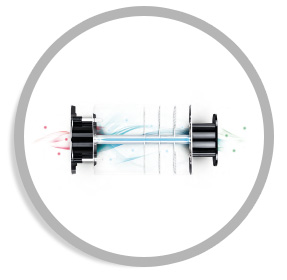
Air Disinfection Technology
How to Choose an Air Disinfection System: What the Technology Actually Does
The air disinfection market has expanded rapidly, and the range of products available has grown with it. Not all of them work the same way, and understanding the differences matters more than the marketing around them.
Air disinfection is increasingly recognised as a meaningful element of hygiene management in commercial environments. The growth in available products is a reflection of that, but it has also made the buying decision more complicated. Systems marketed under similar claims can use fundamentally different technologies with very different performance profiles. Choosing the right one depends on understanding what each approach actually does and, equally, what it does not.
This is a guide to the questions worth asking before committing to any air disinfection system, and an explanation of why the combination approach AIRsteril uses produces results that single-process systems cannot match across the full range of environments where air hygiene matters.
The right questions to ask
Most air disinfection products make broadly similar claims. The useful information is in the detail of how those claims are substantiated and what the technology is actually capable of.
1
What does the technology actually do to airborne microorganisms?
Some systems reduce microbial counts by filtering or capturing particles. Others destroy microorganisms through a physical or chemical process. The mechanism matters because it determines whether the system is genuinely reducing contamination or simply moving it.
2
Does it address odour as well as microbial contamination?
Many air disinfection systems are designed primarily for pathogen reduction in clinical or healthcare environments. They do not address odour or volatile organic compounds. For most commercial environments, odour control is as important as microbial reduction, often more so in terms of the immediate experience of the space.
3
Does it treat the air beyond the unit itself?
Recirculating systems draw air through a processing chamber and release it. The treatment only occurs when air passes through. Systems that distribute treated output actively throughout the space provide more comprehensive coverage, particularly in larger or irregularly shaped environments.
4
Is the evidence from independent testing in real environments?
Laboratory testing under controlled conditions is a starting point. Evidence from real-world environments with independent verification is more meaningful. Look for data from multiple environment types, not just the sector the product was originally designed for.
5
What does the supplier guarantee?
Performance guarantees are a meaningful signal. A supplier confident enough in their product to guarantee odour elimination by name, backed by terms and conditions, is making a commercial commitment that general performance claims do not.
Why single-process systems have limits
A number of air disinfection systems on the market use a single technology: plasma discharge, HEPA filtration, UV alone, or bipolar ionisation. Each of these has genuine efficacy for specific applications. The limitation is that each addresses only part of what makes air hygiene a problem in most commercial environments.
Plasma and UV systems are effective at destroying airborne pathogens as air passes through the unit. They do not address odour, they do not break down volatile organic compounds, and they do not actively treat the air in remote areas of the space. A HEPA filter captures particles but does not destroy microorganisms or address odour compounds, and it requires regular filter replacement to maintain performance.
Pathogen reduction and odour control are related but separate challenges. A system that addresses only one will always leave a gap in the environments where both matter.
For a hospital clean room or an operating theatre, pathogen reduction alone may be sufficient. For the vast majority of commercial environments, including washrooms, gyms, changing rooms, food production areas, waste facilities and general commercial buildings, both are relevant and the day-to-day experience of the space depends on both being addressed.
How the AIRsteril combination approach works
AIRsteril combines three technologies, each with a distinct and separate role. Together they address the full range of what affects air quality in a commercial environment.
Germicidal UV
Destroys airborne microorganisms. As air is drawn through the unit, germicidal UV irradiation destroys bacteria, viruses, mould and fungi. This is the air disinfection function, a physical process that does not involve chemical agents and is not subject to biocidal product regulations. It is the basis for AIRsteril's air disinfection claims and the primary mechanism for reducing airborne microbial contamination.
Photocatalytic Oxidation
Breaks down volatile organic compounds. PCO processes the complex organic compounds that neither UV nor ozone can adequately address on their own. Many persistent odours, particularly those associated with cleaning chemicals, biological activity and waste, are VOC-based. PCO tackles them at a molecular level within the unit, addressing a category of air quality problem that single-process systems typically cannot.
Targeted Ozone
Reaches beyond the unit. Low-level ozone, produced at concentrations well within safe limits for occupied environments, is distributed from the unit as part of the treated air output. It reaches into corners and areas of the space that air processing alone does not treat, breaks down residual odour compounds, and produces the perceptibly clean, fresh air quality that people associate with a genuinely well-maintained environment.
What the evidence shows across real environments
AIRsteril's performance is supported by independent testing across multiple environments and testing bodies, covering microbial reduction, viral efficacy and real-world hygiene outcomes.
HygCen Germany, verified by Fraunhofer Institute
99.99%
Reduction in airborne viral load within 10 minutes. Efficacy confirmed for all enveloped viruses including coronavirus.
ALS Global — International Airport Washroom
77%+
Reduction in airborne microorganisms in a high-footfall airport washroom, with immediate elimination of the original unpleasant odour.
ALS Global — NHS Ambulances
81.45%
Lower airborne microorganism levels in vehicles fitted with AIRsteril units compared to control vehicles, with 88.51% reduction in mould.
NHS Emergency Operations Call Centre
42%+
Reduction in staff absenteeism following AIRsteril installation, monitored before and after across a large operational environment.
The guarantee that single-process systems cannot offer
The practical difference between the combination approach and a single-process system becomes most visible in what can be guaranteed. AIRsteril has offered an odour elimination guarantee for over a decade. It is backed by terms and conditions and it is a direct reflection of what the technology reliably delivers across the environments where it is installed.
No system that addresses only pathogens can make that guarantee, because pathogens are only part of what causes odour. No system that relies on air passing through a unit can guarantee treatment of the full environment, because not all air reaches the unit at the same rate. The combination approach is the only one that addresses all of these dimensions simultaneously, continuously, in occupied spaces.
The AIRsteril Commitment
Odour Elimination Guaranteed
AIRsteril is the only commercial air hygiene system that combines air disinfection through germicidal UV with a guaranteed odour elimination commitment. Independent evidence across multiple environments, over a decade of real-world performance, and a combination of technologies that addresses the full picture.
Independent test reports are available on request. Odour elimination guarantee subject to terms and conditions.