Washroom Hygiene: Beyond Cleaning
Why continuous air treatment matters between your cleaning cycles
Washroom services rely on regular cleaning schedules to maintain standards. But cleaning cycles run every 4, 6, or 8 hours, leaving significant gaps where airborne contamination accumulates. During these gaps, customers are exposed to elevated levels of airborne bacteria, viruses, and odour-causing compounds. Continuous air treatment bridges this gap, elevating hygiene standards without requiring more frequent cleaning schedules.
The Problem: What Happens Between Cleans
A typical washroom cleaning cycle lasts 30 minutes. For the remaining time (when occupancy is often highest) the environment accumulates airborne contamination continuously.
Toilet Flushing: The Hidden Source
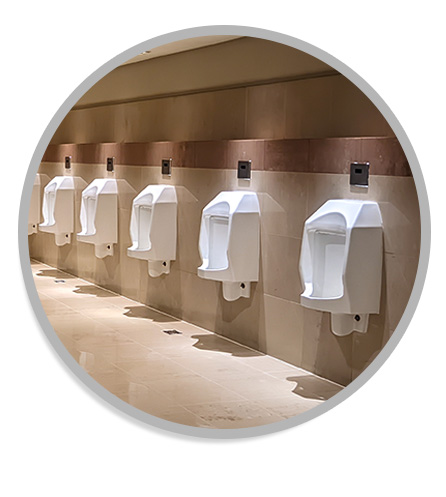
Toilet flushing generates substantial aerosol clouds. Research shows that a single flush produces droplets ranging from 0.3 micrometres to 3 micrometres in size, rising nearly a metre above the toilet seat. These particles remain suspended in air for hours, not seconds.
The Accumulation Effect:
209% increase in ambient aerosol levels over 3 hours in a typical bathroom with standard ventilation, even with closed toilet lids.
In a public restroom with around 100 flushes over 3 hours, aerosol levels for the 0.5 to 1 micrometre range rose by 209%, while levels outside the room remained unchanged. This shows that standard ventilation does not effectively clear these particles; they accumulate during occupancy. (Schreck et al., Physics of Fluids, 2021.)
For washroom service companies, this means customers using the facility between cleans are exposed to progressively higher levels of airborne contamination: bacteria, viruses, and odour compounds.
Why Odour Control Matters Operationally
Odour elimination is your commercial differentiator. Customers notice fresh, clean-smelling washrooms immediately. But odour is an indicator of deeper contamination: volatile organic compounds (VOCs), bacterial byproducts, and bioaerosols.
Odour elimination is your commercial differentiator. Customers notice fresh, clean-smelling washrooms immediately. But odour is an indicator of deeper contamination: volatile organic compounds (VOCs), bacterial byproducts, and bioaerosols.
Continuous Air Treatment: How It Works in Practice
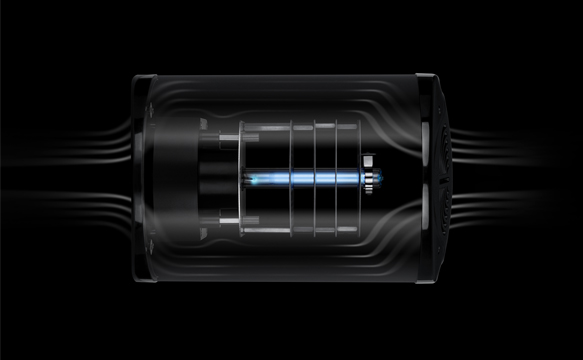
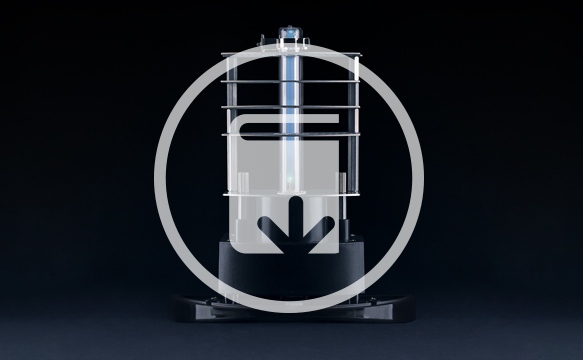
AIRsteril units operate 24/7, continuously treating air through a combination of processes including germicidal UV disinfection, cycling the entire washroom air volume through treatment multiple times per hour.
The evidence:
>99.99% reduction in airborne viral contamination within 10 minutes, tested across a large 75m³ environment rather than within the unit alone (HygCen GmbH, 2020).
77%+ reduction in airborne microorganisms measured in a live, working airport washroom (ALS Global). In real-world operation, this translates to measurably lower baseline levels of airborne contamination throughout the day, without requiring additional cleaning labour or schedule changes.
Operational Benefits for Your Service
Elevates Standards Between Cleans Customers experience consistently fresh, hygienic environments. The facility maintains high air quality during peak occupancy, the times customers judge washroom quality most.
Supports Your Cleaning Intervals Continuous air treatment reduces surface recontamination between cleans. Your cleaning schedule becomes more effective because the environment stays cleaner during gaps.
Differentiates Your Service Standard washroom contracts focus on visible cleanliness and odour masking. Continuous air hygiene is a genuine step above, and customers notice the difference.
Reduces Illness and Complaints Continuous air treatment supports improved hygiene perception and reduces airborne contamination between cleaning cycles, complementing your cleaning programme throughout the day.
Real-World Impact
An NHS facility (South Central Ambulance Service) installed AIRsteril units in call centre and office areas in September 2014. Over 9 months, the facility documented:
• Reduction in Cold, Cough, and Flu-related sickness absence
• Reduction in Chest and Respiratory problems
• Estimated saving of £213,704 in sickness coverage costs
While this healthcare setting isn't directly equivalent to a commercial washroom, the data was associated with reduced reported respiratory illness absence, although it was based on sickness absence reporting rather than controlled air testing.
How to Position This with Customers
The Commercial Case
Lead with hygiene elevation: "Our washroom service now includes continuous air treatment, keeping your facilities fresher and more hygienic between cleaning cycles."
Emphasise differentiation: "While competitors manage surfaces, we manage the entire environment, including the air."
Support with evidence: Reference the toilet flushing data and laboratory reduction rates. Customers understand that 100 flushes accumulate contamination, and they appreciate a solution.
Address cost objections: Position as a premium service tier, not a cost add-on. The operational value (fewer complaints, perception of enhanced hygiene) justifies the cost for quality-conscious facilities.
Limitations and Honesty
What continuous air treatment does not do:
Continuous air treatment is not a substitute for regular cleaning. Surfaces still require disinfection. Nor does it prevent direct transmission if two people are in close proximity. Proper ventilation, hand hygiene, and absence of sick users remain essential. AIRsteril works alongside your cleaning schedule, not instead of it.
Next Steps
For washroom service companies, continuous air treatment represents a genuine operational upgrade that differentiates your service, supports your cleaning efficacy, and provides measurable customer benefits. The technology is proven, the evidence is clear, and the positioning is strong.
Customers increasingly understand that washroom hygiene is multi-layered. Offering continuous air treatment as part of your premium service tier positions you as the provider who understands and addresses the complete environment.
Evidence sources: Schreck et al., "Aerosol generation in public restrooms," Physics of Fluids 33, 033320 (2021); HygCen GmbH laboratory testing (Test Report SN 30794, November 2020); ALS Global real-world testing in a working airport washroom and in ambulances in active service (NHS South Central Ambulance Service); South Central Ambulance Service NHS Trust sickness-absence data (2015).